A wellness check is when someone, usually police or a worried relative, visits a person to confirm they're okay after others can't reach them. They tend to happen late, after days of silence. A daily check-in alerts your own contacts within hours of a missed deadline instead, so the first visit comes sooner.
What a wellness check actually is
A wellness check (also called a welfare check) is a simple visit with one goal: confirm a person is okay. Sometimes it's a relative or neighbor knocking on a door. Sometimes someone calls their local police non-emergency line and asks officers to stop by. Who can request one, and what happens when someone answers or doesn't, varies by place, so look up your own area's rules rather than assuming.
The usual trigger is a pattern break. A parent who always picks up on Sunday doesn't. A coworker who never misses a shift stops replying. A neighbor's lights stay off. Someone gets worried enough to act.
Why wellness checks happen late
The hard part isn't the visit. It's the wait before it. People who live alone rarely have anyone whose job is to notice a quiet day, so the sequence tends to look like this:
- Day 1: A text goes unanswered. Everyone assumes the phone is off or they're busy.
- Day 2: A second text, maybe a call. Still no one wants to overreact.
- Day 3 or later: Someone finally feels sure enough to drive over or call for a check.
Nobody in that chain did anything wrong. The delay comes from not knowing what "normal" is. If you don't have a fixed time you're expected to be heard from, there's no moment when silence becomes a clear signal. Everyone is guessing, and guessing slowly.
Give the people who care a clear signal
You can't prevent every emergency. What you can do is shrink the gap between something going wrong and someone noticing. The low-tech version is an agreed daily text: "Message mom by 9 p.m." It works until someone forgets, travels, or sleeps through it, and it puts the burden of chasing on the person who's worried.
An automated check-in is the same pact with the chasing taken out. With Beacon Safe you pick a schedule of daily, every 48 hours, or every 72 hours, at a time that suits you, and tap once to say you're okay. If you miss it, a 2-hour grace period starts, which covers a long shift or a phone left in another room. After that, your contacts get an email and an SMS together (SMS is on the Plus plan), then an automated voice call about 5 minutes later, with a follow-up a few hours on and a re-alert at 24 hours until someone responds.
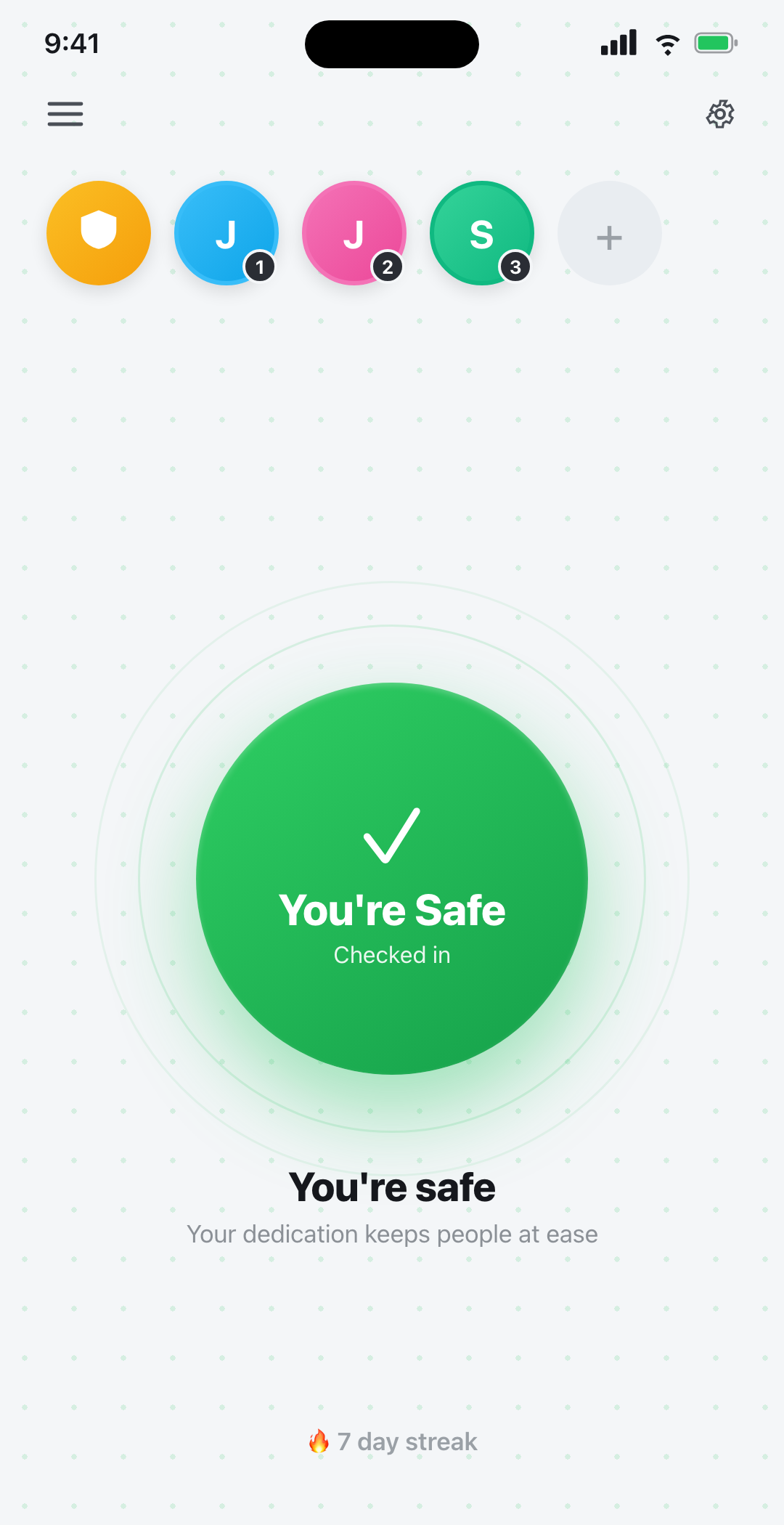
The deadline runs on Beacon's servers, so it still fires if your phone is dead, off, or lost. Your contacts don't need the app: they respond by tapping a secure link, replying to the text, or pressing a key on the call. And because Beacon never tracks location (no GPS, no map, no history), the only thing anyone learns is whether you checked in. Read more on why Beacon never tracks location.
What happens if you do miss a check-in
Your contacts are the ones who decide what to do. They might call you, drive over, ask a neighbor to knock, or ask local authorities to do a wellness check. Beacon Safe doesn't contact police or 911 for you; its job is to make sure the people who know you hear about the silence within hours, not days. That's usually the difference between a quick visit and a long worry.
Setting it up so it fits your life
- Pick two or three contacts who live in different places. The free tier includes 3 contacts and email alerts at $0. Plus is $19.99 a month ($199.99 a year) for up to 10 contacts, SMS, and voice calls.
- Tell them what to expect. A quick message explaining the alert means they won't panic or ignore it.
- Make sure one person can physically get in. A spare key or a neighbor who can knock turns an alert into action.
- Choose a time you'll actually hit. A check-in tied to a habit, like morning coffee, rarely gets missed.
For the glossary version of this topic, see what a wellness check app is and how Beacon Safe works. If you live alone, Beacon Safe for people who live alone walks through a typical setup. For more habits like this, read 7 safety habits for anyone who lives alone, and if you're setting this up for a relative, how to check on an aging parent without hovering.
Beacon Safe is not an emergency service and does not contact 911; in a life-threatening emergency call 911. Alert delivery depends on network availability.
Make silence a signal your people can read
A real free tier, no location tracking, ever — and a clear plan for who hears from you.