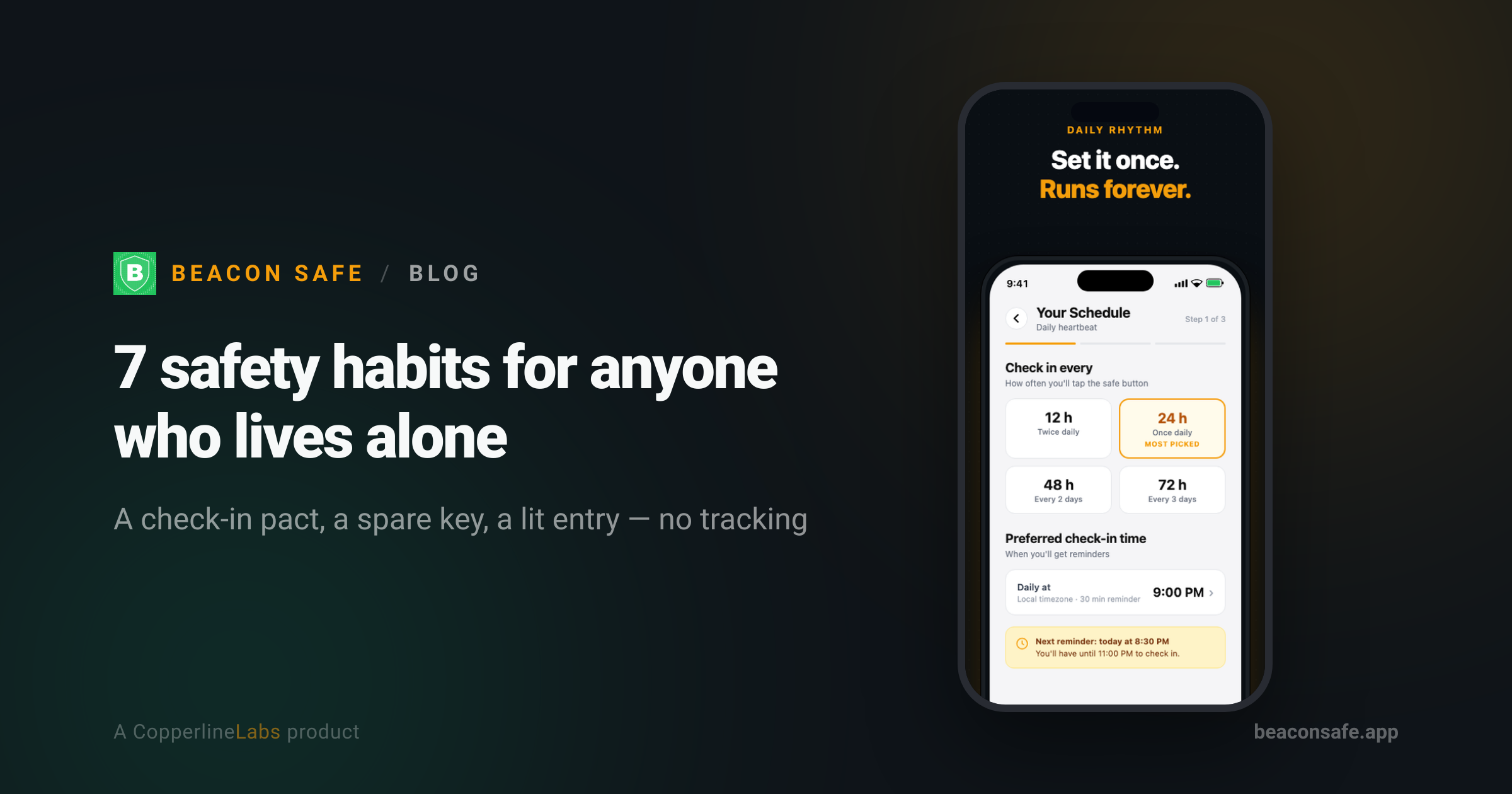
The safest habits for living alone are simple and repeatable: a daily check-in pact with someone who will notice your silence, a spare key held by a trusted person, working smoke and carbon monoxide alarms, a well-lit entry, an emergency contact saved in your phone, one friendly neighbor, and a plan for when your routine changes.
Living alone is fine. Going unnoticed is the risk.
Most people who live alone will never have an emergency. The problem is the small chance of one when nobody is around to see it: a fall in the bathroom, a sudden illness, a fire at 3 a.m. The habits below don't make you nervous or watched. They shorten the gap between something going wrong and someone knowing about it.
There are seven of them. You can start with one tonight.
1. Set up a daily check-in pact
Pick one person, a sibling, a friend, a parent, and agree that you'll confirm you're okay at a set time each day. A text works. The point is that your silence now means something to someone. The best version is the one you don't have to remember to enforce.
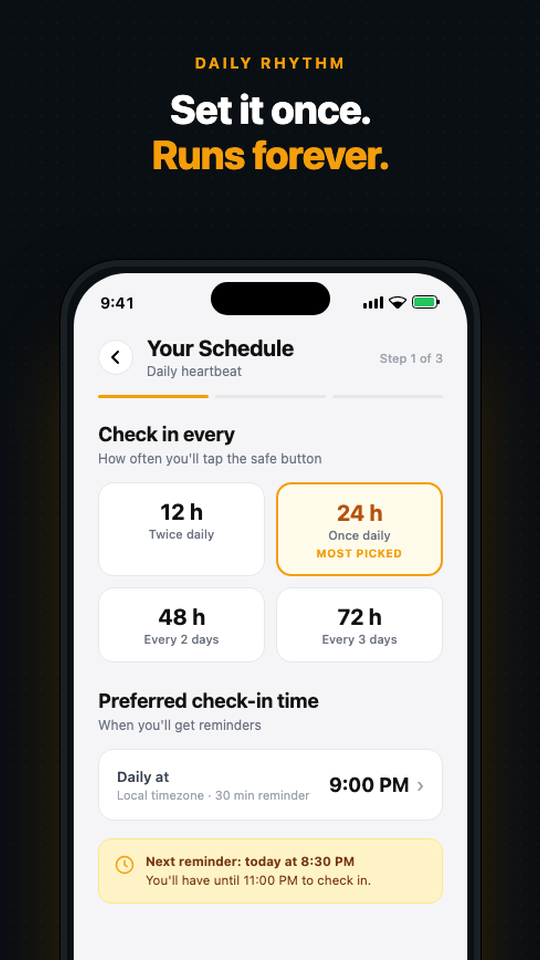
That's where an app fits, once, honestly. Beacon Safe turns the pact into a schedule: you choose daily, every 48 hours, or every 72 hours, and tap once. If you miss it, a 2-hour grace period starts. After that, your contacts get an email (and a text, on the Plus plan) together, and an automated voice call about 5 minutes later. The timer runs on Beacon's servers, so it still fires if your phone is dead or lost. The free tier includes 3 contacts and unlimited check-ins. See how it works for people who live alone.
2. Give a trusted person a way in
An alert can tell someone that something is wrong. It can't open a locked door. Give a spare key to one or two people who live close by, or put one in a lockbox and share the code with them. Write down who has access so you don't have to remember, and change the code if you ever stop trusting someone with it.
3. Keep smoke and carbon monoxide alarms working
This is the least exciting habit and the one that matters most. Put an alarm on every level and outside sleeping areas, press the test button once a month, and replace the batteries on a schedule instead of waiting for the chirp. If you live alone, nobody else will hear the alarm and nudge you, so a working one is your whole early warning. Basic smart alarms that send a phone notification are a reasonable upgrade, especially if you travel.
4. Light your entry and check it before you unlock
A well-lit doorway makes it easier to see who's there and harder for anyone to linger. Use a motion-sensor light or a warm bulb on a timer, and keep the path clear. Have your keys in hand before you reach the door so you're not standing in the dark rummaging through a bag. If you use a video doorbell, glance at it before you open up.
5. Put an emergency contact in your phone
If you're ever found unresponsive, the first question anyone asks is "who do we call?" Save an ICE (In Case of Emergency) contact in your phone, and on most phones you can add emergency contacts and medical notes so they're reachable from the lock screen. Tell the person that you did it.
6. Know one neighbor by name
You don't need to be close with the whole building. One neighbor who knows your face, your usual schedule, and how to reach you is often the fastest person who can knock on your door. Trade phone numbers. Offer to do the same for them. It costs almost nothing and pairs well with the spare key.
7. Tell someone when your routine changes
Habits protect you because they're predictable, so a change should be announced. If you're traveling, sick in bed, or working odd hours, send your contact a quick note. A daily interval can also be too tight for a long trip or a hiking weekend; a 48- or 72-hour check-in gives you more room without giving up the safety net. There's more in the solo living safety checklist, and if you're helping a parent set this up, read how to check on an aging parent without hovering.
You don't have to track anyone to keep them safe
Every habit here is about closing the gap between "something happened" and "someone knows." None of them require sharing your location. Beacon Safe has no location tracking, ever: no GPS, no map, no movement history. You can start free at $0, and Plus is $19.99 a month if you want SMS, voice calls, and up to 10 contacts. See pricing for the details.
Beacon Safe is not an emergency service and does not contact 911; in a life-threatening emergency call 911. Alert delivery depends on network availability.
Turn the check-in habit into a schedule
A real free tier, no location tracking, ever — and a plan for who gets told if you miss a check-in.