A solo travel safety checklist has six parts: share a rough itinerary, agree a daily "I'm okay" time, keep offline copies of key numbers, save local emergency numbers, sort the paperwork, and set a server-side check-in that alerts your contacts if you go quiet, even when your phone is dead or out of signal.
The risk on a solo trip is the silence, not the destination
Most solo trips go fine. What makes traveling alone different is the gap: if something goes wrong, there's no travel companion to notice, and the people back home may not realize for days. A good pre-trip routine doesn't make you anxious. It makes sure someone knows what "normal" looks like for you, so a break in it gets noticed.
Do these six things before you leave. Most take under ten minutes.
1. Share a rough itinerary with one or two people
Send a short note with the cities, the nights you'll be in each one, and where you're staying. It doesn't have to be exact, and it shouldn't be public. One or two people who will actually read it are enough. Include your flight or train details and a date you expect to be home. If plans change, send a one-line update.
Be clear about what's shared and what isn't. Beacon Safe has no location tracking, so it won't tell your contacts where you are. Your itinerary note is how they'll know where to start looking.
2. Agree a daily "I'm okay" time
Pick a time of day and one message, even just "ok." Choose a time you can keep across time zones, like right after breakfast, rather than a fixed hour on your home clock. The agreement matters as much as the message: your contact needs to know that no message by a certain time means they should try to reach you.
3. Keep offline copies of key numbers and documents
Phones die, get stolen, and lose signal. Save a photo or PDF of your passport, visa, insurance card, and booking confirmations somewhere you can reach without your phone, such as an email to yourself or a printed sheet in your luggage. Write down the numbers you'd need if your phone vanished: your emergency contact, your bank's card-cancellation line, your embassy or consulate, and your accommodation.
4. Save the local emergency numbers
Emergency numbers vary by country, and the one you know from home may not work. Look up the local police and ambulance numbers before you land and save them in your phone and on paper. Beacon Safe is not an emergency service, so this step is yours.
5. Sort the paperwork
Tell your bank you're traveling so a foreign charge doesn't freeze your card. Check that your travel or health insurance covers where you're going and know how to reach it. Check your passport's validity against your destination's rules. None of this is glamorous, and all of it is much harder to fix from another country.
6. Cover the go-dark gap with a check-in
A daily text pact works until the person forgets, or until you're on a long train, a ferry, or a trailhead with no signal. That's the gap a check-in with a deadline covers, and why it's worth setting up the automated version.
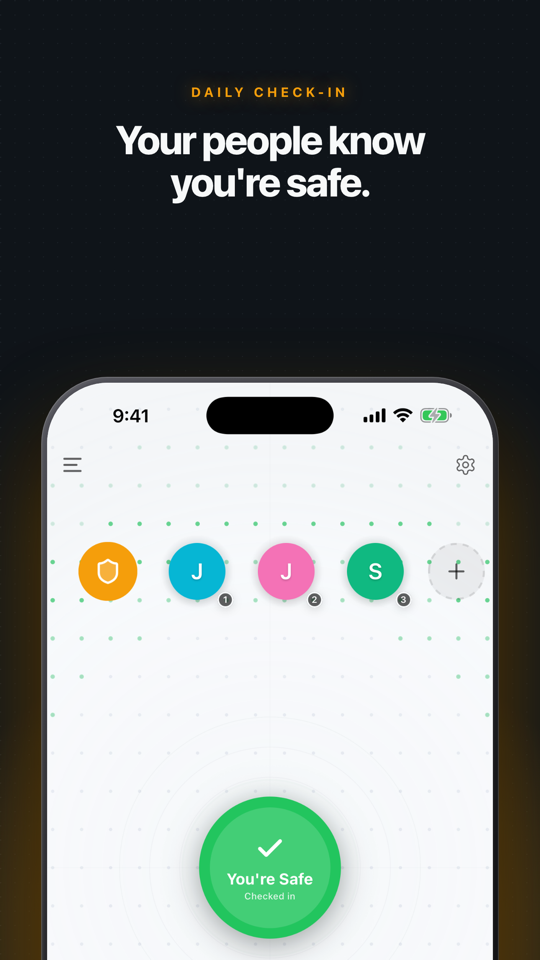
With Beacon Safe you choose a check-in schedule of daily, every 48 hours, or every 72 hours, at a time you pick, and tap once to confirm you're okay. If you miss it, a 2-hour grace period starts. After that, your contacts get an email (and a text, on the Plus plan) together, and an automated voice call about 5 minutes later, with follow-ups until someone responds. The timer runs on Beacon's servers, so it still fires if your phone is dead, off, or lost. Your contacts don't need the app; they respond by tapping a secure link, replying to the text, or a keypress.
Match the interval to the trip. Use a daily check-in in cities where you'll have signal. For a hiking leg or a remote stretch, a 72-hour interval leaves room for patchy coverage, and you can tell your contacts about it in your itinerary note. You do need a connection to check in, so pick a time when you'll normally have one. The free tier includes 3 contacts and unlimited check-ins at $0; Plus is $19.99 a month for up to 10 contacts plus SMS and voice calls. See Beacon Safe for solo travelers, how it works, and pricing.
A quick pre-trip run-through
- Itinerary sent to one or two people, with a return date.
- Daily "I'm okay" time agreed, adjusted for time zones.
- Offline copies of documents and key numbers stored away from your phone.
- Local emergency numbers saved on your phone and on paper.
- Bank, insurance, and passport sorted.
- Check-in schedule set and contacts added before you board.
If you're going somewhere remote on foot, read how a solo hiker sets up a 72-hour check-in. For the at-home version of these habits, see the solo living safety checklist.
Beacon Safe is not an emergency service and does not contact 911; in a life-threatening emergency call 911. Alert delivery depends on network availability.
Set your check-in before you go
A real free tier, no location tracking, ever — and a plan for who gets told if you miss a check-in.