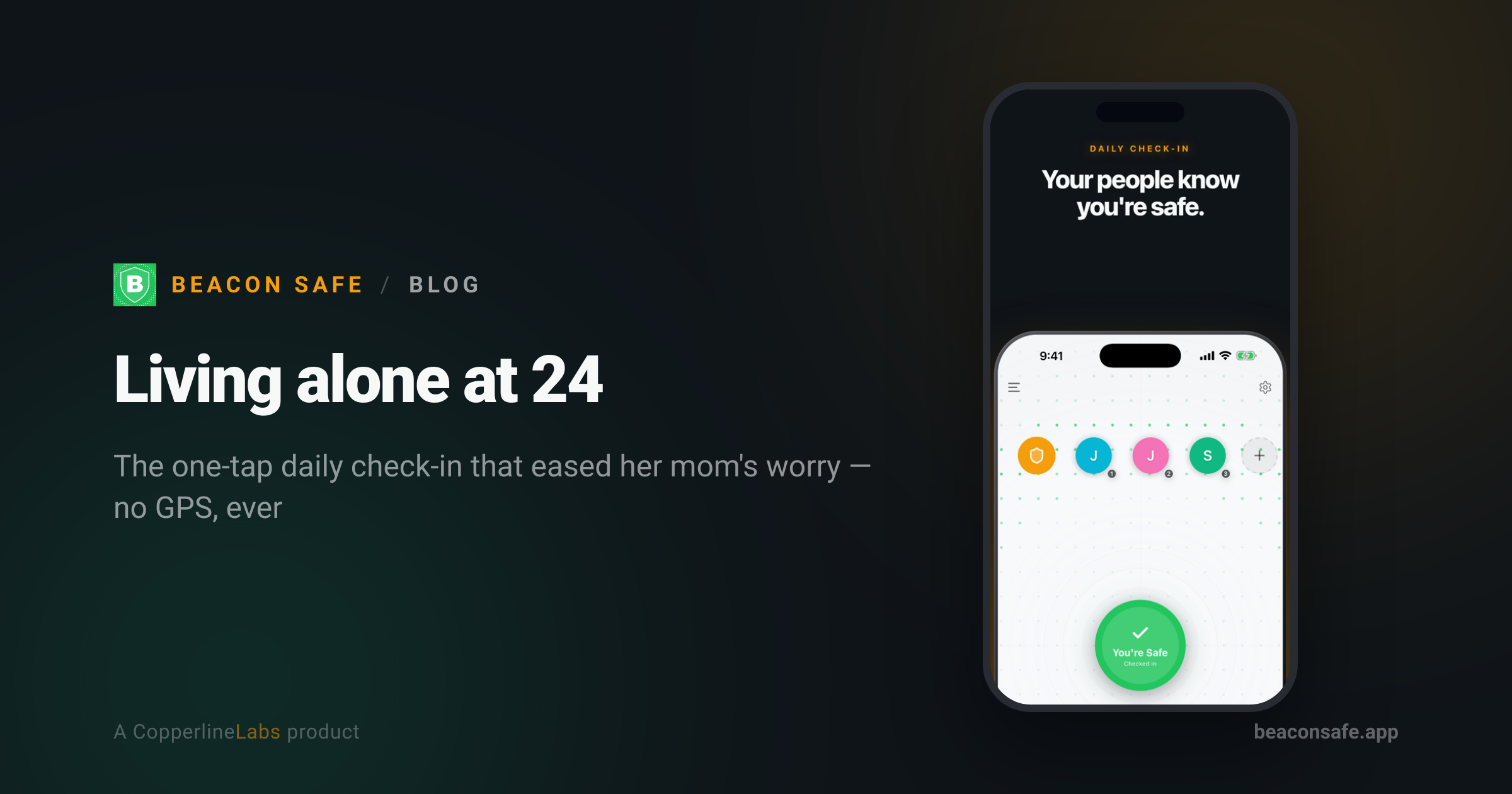
Priya moved into her first solo apartment at 24 and set a daily 9 p.m. check-in on Beacon Safe with her mom and her best friend as contacts. If she doesn't tap "I'm okay" within the 2-hour grace period, they get an email and text together, then an automated call about 5 minutes later — no GPS involved.
The apartment that finally felt like her own
Priya's first month living alone was mostly great — her own kitchen, her own thermostat, nobody's dishes in the sink but hers. The one snag was her mom's phone calls, which had quietly shifted from "how's the new place?" to "did you make it home okay?" almost every night. It wasn't distrust. It was just the specific, low-grade worry a parent gets when their kid moves out for the first time and there's no roommate around to notice if something's wrong.
Priya understood the worry, but the nightly calls were starting to feel like a chore for both of them — a scheduled interruption instead of an actual conversation. She wanted something that answered the real question ("did you make it home, are you okay") without turning into a phone call every single night.
Why 9 p.m., and why a habit beats a phone call
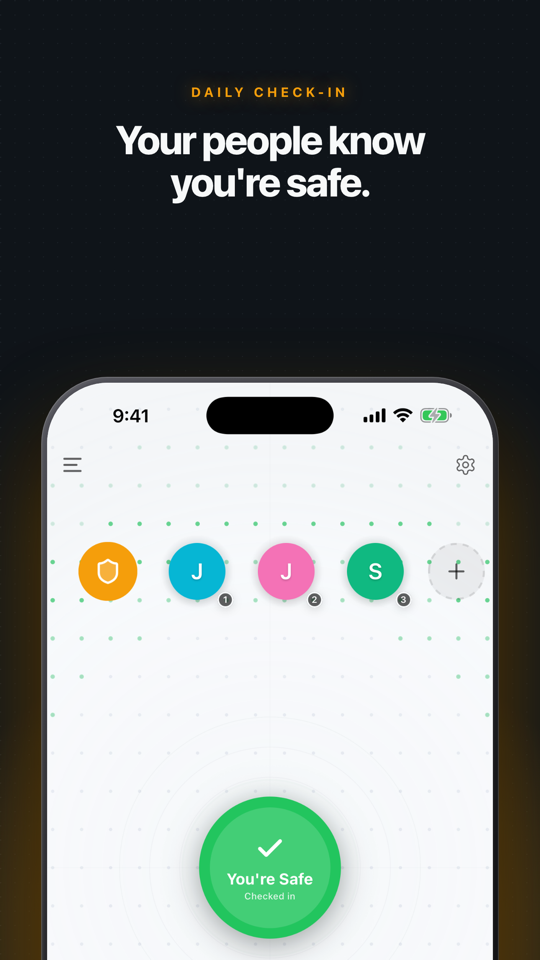
Priya set her Beacon Safe check-in for 9 p.m. — late enough to cover a normal evening out, early enough that a missed check-in wouldn't ruin anyone's sleep working it out. The interface is a single tap: open the app, confirm she's okay, done. If she's out later than planned, there's a 2-hour grace period built in before anything happens, so a late dinner or a delayed train doesn't turn into an alarm.
What made it stick, more than the app itself, was that it replaced a conversation that depended on someone remembering to have it. Her mom doesn't have to guess whether it's a good night to call. Priya doesn't have to narrate her evening on the phone. The habit just runs quietly in the background until it doesn't — which is exactly the shift a lot of young women living alone are looking for.
No GPS, no map — just an answer
Before settling on a check-in app, Priya tried a location-sharing app that a friend recommended. It lasted about a week. Having her mom able to see a live dot moving around the city felt less like reassurance and more like being watched, and it didn't actually answer the question that mattered — "are you safe" — it just showed a location, which isn't the same thing. Beacon Safe works the other way: it has no location tracking, ever, no map and no movement history. It only reacts to whether Priya checked in by her deadline, not to where she's been. Her mom doesn't get a trail of Priya's evening; she gets a single, deliberate "I'm okay," and if that doesn't come, she gets told. The no-location-tracking model is the part Priya says she'd recommend first to anyone weighing the two approaches.
What actually happens if she doesn't check in
Priya tested a missed check-in on purpose during her first week, mostly so her mom would know what to expect if it ever happened for real. The sequence: at the 2-hour mark past her 9 p.m. deadline, her contacts get an email and text at the same time; if nobody has responded, an automated voice call goes out about 5 minutes after that; a follow-up notification fires roughly 4 hours later if it's still unresolved; and a re-alert repeats at the 24-hour mark until someone confirms she's okay. Neither her mom nor her best friend needed to install anything to receive it — they respond with a tap on a secure link, a text reply, or a phone keypress.
Running that test mattered more than she expected. Her mom knew exactly what the alert meant the one time it actually happened (a dead phone battery on a night out), instead of being blindsided by an automated call at 11 p.m. For anyone setting this up for the first time, that's worth doing before you actually need it — the how it works page walks through the full escalation.
Two contacts, not a group chat
Priya's contact list is short on purpose: her mom and her best friend Jenna, who also lives alone across town and set up her own check-in the same week. Both are on Beacon Safe's free tier, which covers up to 3 emergency contacts with email alerts and unlimited check-ins at $0. If she ever wanted the faster escalation — SMS and an automated phone call in addition to email, plus up to 10 contacts — that's what the $19.99/month Plus plan (or $199.99/year) adds. For now, a daily email to two people who already know her routine is enough, and it fits the same steady, always-on habit that works for anyone settling into living alone for the first time.
A habit, not a leash
What changed for Priya wasn't a single dramatic feature; it was that the check-in fit quietly around her actual evening instead of asking her to narrate it. She doesn't get a "did you make it home?" text mid-dinner. Her mom doesn't have to remember to call. Living alone at 24 didn't get any less normal — it just got a little less anxious for both of them, one tap at a time. If you're weighing the same tradeoff, our explainer on how these check-in apps actually work and this night-shift check-in routine cover two more ways people make the habit fit their own schedule.
Beacon Safe is not an emergency service and does not contact 911; in a life-threatening emergency call 911. Alert delivery depends on network availability.
Set up a check-in that fits your evening
A daily, 48-hour, or 72-hour check-in with a real free tier — no location tracking, ever.